When the Ukrainian parliament began discussing the revision of the official translation of the “European Charter for Regional or Minority Languages“, the topic unexpectedly became one of the most discussed in the field of cultural and legal policy. The reason is simple: the updated translation of the Charter, prepared by the Ministry of Foreign Affairs of Ukraine in January 2024, “pulled” changes in several laws — and opened the way to revising the list of languages that receive official support status.
One of such documents was bill №14120, considered in the Verkhovna Rada on November 18–19, 2025, by two committees —
the Committee on Humanitarian and Information Policy and the Committee on Ukraine’s Integration into the EU.
What bill №14120 provides
The document proposes to bring the following acts in line with the updated translation of the Charter:
The Law of Ukraine “On the Ratification of the European Charter for Regional or Minority Languages”;
The Law of Ukraine “On National Minorities (Communities) of Ukraine”;
The Law of Ukraine “On Media”.
Main changes:
The official name of the European Charter and its terminology are updated — since the previous translation contained errors criticized by lawyers and linguists.
The list of languages covered by protection is revised.
A clarified interpretation of the concepts “regional language”, “minority language”, “historical community language” is introduced.
These are not cosmetic changes: the status of a language in Ukraine determines a whole range of opportunities — from education and cultural programs to media accessibility.
Which languages receive confirmed protection status
According to the committee’s conclusions, the updated translation by the Ministry of Foreign Affairs helped accurately determine which languages fall under the Charter’s criteria.
Thus, the list of officially confirmed support languages includes:
Hebrew — the historical language of the Jewish people in Ukraine;
Yiddish — the traditional language of the Ashkenazi community;
Czech, Romanian, Gagauz, and several others.
This is not about introducing a new status, but about a legal clarification that grants Jewish languages in Ukraine the same rights to cultural and media support as other traditional minority languages.
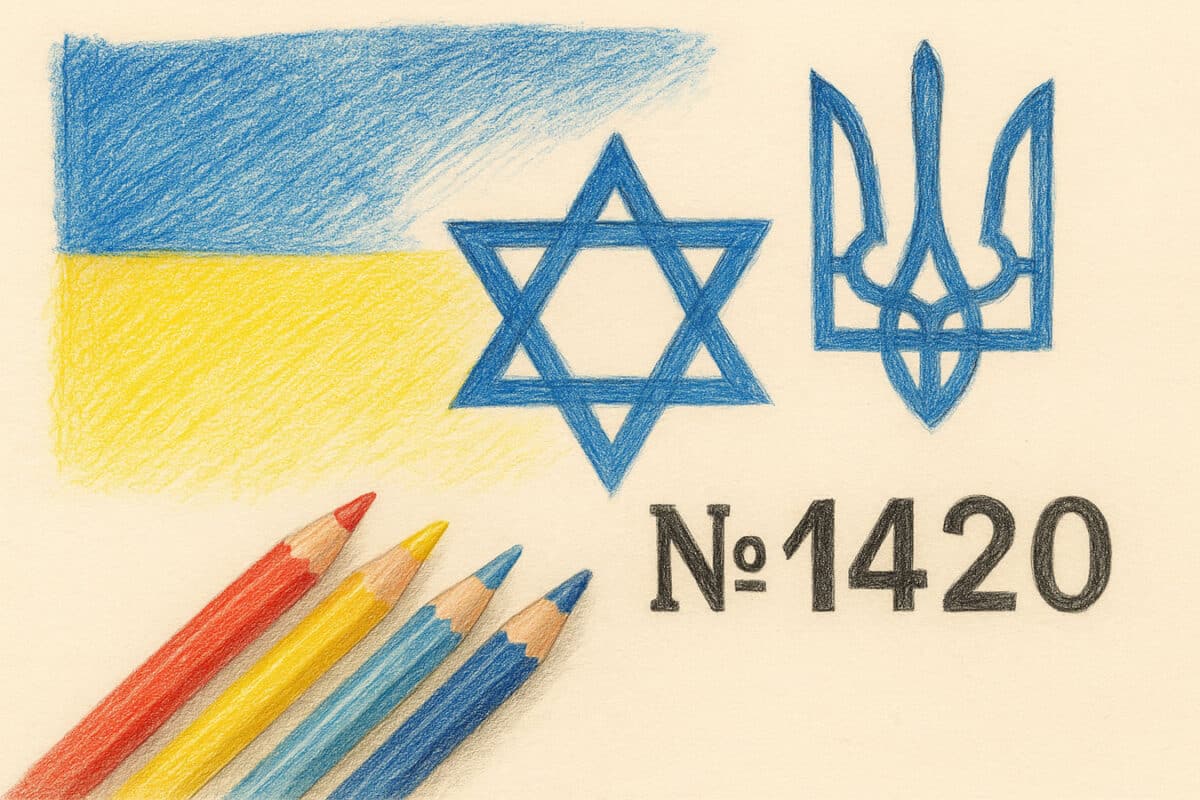
What is happening with the Russian language
This became part of the public discussion.
But it is important to emphasize: bill №14120 does not introduce direct restrictions. It only adjusts the list of languages according to the criteria of the Charter approved by the Council of Europe.
These criteria are simple:
The Charter applies to less widely used,
historically present,
endangered languages.
The Russian language in Ukraine does not fall under these parameters.
That is why the committees of the Verkhovna Rada emphasize:
this adjustment is in line with the practice of EU countries and does not violate European law.
Position of the Committee on Ukraine’s Integration into the EU (November 18–19, 2025)
At the meeting on November 18 and in the official publication of November 19, 2025, 08:49, the Committee on Integration into the EU reviewed bill №14120 and gave a clear conclusion:
✔️ The bill does not contradict Ukraine’s obligations to the EU
✔️ Does not go beyond the legal mechanisms of the Council of Europe
✔️ Corresponds to the practice of applying the Charter in member countries
⚠️ But requires refinement, as indicated by the committee:
adjustment of terms in several bills;
clarification of formulations related to language support mechanisms;
precise legal synchronization with the updated translation by the Ministry of Foreign Affairs.
Important:
The Committee did not see conflicts with EU law, which means that the document is in line with Ukraine’s European integration direction.
Why the new translation of the Charter was necessary
The Ministry of Foreign Affairs completed the updated translation of the Charter in January 2024. This was the first revision in many years.
Reasons for the update:
the previous version contained inaccuracies of the full meaning;
some terms were translated “freely”, diverging from the authentic English and French texts;
discrepancies created a field for political manipulation;
during discussions on the rights of national minorities, outdated and incorrect interpretations of the Charter often surfaced.
Now Ukraine works with a correct official text — and this fact became the basis for bill №14120.
What this means for the Jewish community of Ukraine
1. Hebrew and Yiddish receive guaranteed legal support
The Charter provides for:
creating conditions for language learning;
preserving cultural tradition;
supporting publishing activities;
presence of the language in public and cultural initiatives;
development of public media in these languages.
In fact, this is a legal confirmation that the Jewish community has the right to full linguistic development.
2. This is an important signal against the backdrop of regional history
Jewish languages in Ukraine are:
the culture of a centuries-old community;
heritage that survived Soviet bans;
an element of national identity.
The inclusion of Hebrew and Yiddish in the list of protected languages is a symbolic gesture of support for cultural diversity, which the Council of Europe has always insisted on.
3. Political balance is maintained
The document does not contain ethnopolitical biases:
it treats all linguistic minorities equally and considers only the Charter’s criteria.
Why the bill became noticeable in the information field
Despite its technical nature, the project caused a resonance for several reasons:
the topic of languages is traditionally sensitive;
many readers mistakenly believed that the Charter protects “all languages” — in fact, it protects endangered ones;
the exclusion of the Russian language was interpreted politically by many media.
But according to the conclusions of both parliamentary committees:
Bill №14120 fully complies with European law
and does not violate Ukraine’s obligations to the Council of Europe.
Conclusion
Ukraine is completing an important stage of language policy adjustment:
the translation of the European Charter was updated — January 2024;
on November 18–19, 2025, parliamentary committees confirmed that bill №14120 complies with EU standards;
Hebrew, Yiddish, and other historical languages officially receive strengthened protection status;
state policy becomes more precise and synchronized with European standards.
NANews Israel News Nikk.Agency
For the Jewish community of Ukraine, this is —
official confirmation of the right to develop native languages and cultural tradition.
