
“When the Russians came, they didn’t take him prisoner — they just shot him in the back.”
Journalists from “Shomrim” are keeping a list of Israelis (specifically with Israeli citizenship – ed.) who have died or gone missing in Ukraine. Names are not published. As of January 5, 2025, there are reportedly 12 people on this list.
“The fate of these Israeli citizens does not resonate in Israeli society, — … — This is an issue that is almost never raised, if at all.”
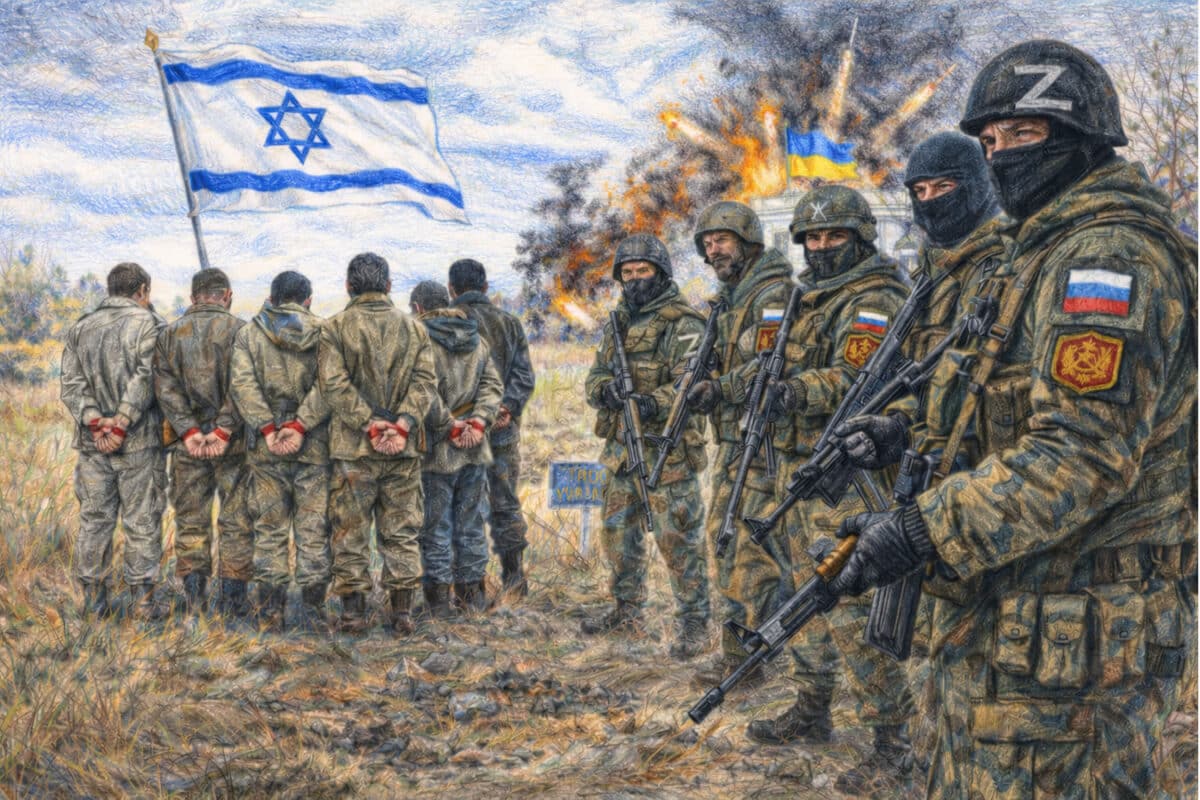
According to the Ukrainian Coordination Headquarters for the Treatment of Prisoners of War, at least 12 Israeli citizens are currently considered missing or held in Russian captivity in the context of Russia’s war against Ukraine.
This was reported on January 5, 2026 by the Israeli platform N12 Mako, citing the investigative project “Shomrim”.
The Israeli investigation emphasizes that these are mostly people with dual citizenship (Israel–Ukraine), and the estimate may be understated.
According to this data, it mainly concerns those who fought in the ranks of the Ukrainian army. A smaller part, as stated in the material, found themselves in combat zones under different circumstances, and the fate of these people remains unknown.
Why “at least” is an important caveat
The authors of the investigation explain: authorities often do not have systematic information about dual citizenship, so cases that “fall out” of the records are almost inevitable. Not all Israelis with Ukrainian roots who were mobilized or volunteered notified Israeli or Ukrainian authorities about their status — hence the conclusion that the actual number may be higher.
Indirect confirmation of the “blind spot” is provided through the words of Israel’s ambassador to Ukraine Michael Brodsky: according to him, the embassy often learns about the participation of Israelis in the war only after their death, after which it helps with funerals and the return of bodies to Israel.
Visit of the Ukrainian delegation to Israel and confirmation of “at least 8”
In early December, according to the investigation, an official Ukrainian delegation visited Israel — amid Kyiv’s attempts to engage Israel in more active support. Among the participants was Yulia Pavlyuk, head of one of the regional directorates of the Coordination Headquarters for Prisoners. At a conference in Tel Aviv, she mentioned that among Israelis there are those who died, were captured, or went missing.
After these words, journalists contacted the Ukrainian embassy in Israel. There, it is claimed, they confirmed: it concerns at least eight missing Israelis, but “by all estimates” the number is higher — precisely due to incomplete accounting of dual citizenship.
“Those who are missing can remain without status for months”
The investigation separately emphasizes that information about prisoners and missing persons in this war is often fragmentary: months, and sometimes longer, may pass without clarity on what happened to a person at the front. Reports of the deceased sometimes appear only from the stories of comrades-in-arms.
The story of an Israeli “A.” from Ashdod, who has been fighting since the first day of the full-scale invasion, is given. Earlier he wrote: “I was hardened in the crucible of Severodonetsk and Bakhmut”. His comrade, according to him, was wounded in heavy fighting near Bakhmut.
Then comes one of the harshest quotes of the material:
“When the Russians came in, they didn’t take him prisoner — they just shot him in the back.”
Israeli ID “in the frame” and the Kozlovsky case
Another interlocutor of the investigators is an Israeli who fought in the Ukrainian army and returned to Israel after October 7 to serve in the reserves. He says he heard of cases where Israeli-Ukrainians are held in Russian captivity, as well as “testimonies” of the release of certain individuals.
One of the examples given is Volodymyr Kozlovsky, captured in 2022 by forces supported by Russia. In a video shot before his release, he, as stated in the material, shows an Israeli ID, “waving” it in front of the camera.
Ukraine wanted Israelis to “hear” about Russian captivity
The December delegation, according to the text, hoped that the stories of Ukrainians who went through Russian captivity would resonate in Israel, especially against the backdrop of the experience of hostages from Gaza. The delegation included, among others, former Kherson mayor Volodymyr Mykolayenko, who was previously held in Russia under harsh conditions, as well as other freed Ukrainians.
An official European source familiar with the organization of the visit claims: the Ukrainian side prepared the meeting program for weeks, but not a single official representative of Israel attended the central reception. Moreover, according to the source, a number of invited senior Foreign Ministry officials did not even respond to the invitations.
Political background: contacts with Moscow and Putin’s phrase about Hamas
The investigation presents this topic against the backdrop of recent weeks when Prime Minister Benjamin Netanyahu publicly praised his contacts with Vladimir Putin and held several phone conversations with him — despite Russia’s criticism of Israel during the Gaza war and after strikes on Iran.
Separately, an episode of Putin’s meeting with freed Israeli captives Alexander Trufanov, his mother Elena, and fiancée Sapir Cohen is cited, where the phrase was heard: “Your release was a humanitarian act on their part” — in the context of gratitude to Hamas’s political leadership.
The authors also claim that Israel did not publicly protest when Russia struck “Jewish targets” in Ukraine, including synagogues in Kyiv and Kherson.
Against this backdrop, Ukraine’s ambassador to Israel Yevgen Korniychuk stated that he was surprised by Israel’s rhetoric, “especially considering October 7,” and added: “We need to stand on the right and moral side of history”. After these words, as stated in the material, he was summoned to the Israeli Foreign Ministry for a “talking-to.”
“Russian House” in Jerusalem and diplomatic symbolism
The investigation presents another contrast: during the same period when Israeli officials, according to the source, did not attend the Ukrainian event, senior Foreign Ministry representatives participated in events initiated by the Russian diplomatic mission — including a New Year’s reception at the Russian ambassador’s residence and the opening ceremony of the “Russian House” in Jerusalem (a cultural center managed by Moscow).
It is separately noted that many countries closed branches of the “Russian House” after the 2022 invasion, considering these structures as tools for strengthening Moscow’s influence and spreading propaganda. The state Russian company managing the network of such institutions has been under EU sanctions since July 2022.
“Welcome to Buchenwald”: what former Ukrainian prisoners told in Israel
One of the strongest fragments of the material is the testimonies of former Ukrainian prisoners, voiced in Israel.
Ukrainian journalist Dmytro Khilyuk, speaking at the “Anu” museum, said that upon being captured, a Russian guard patted him on the shoulder and said: “Welcome to Buchenwald”.
Khilyuk and his elderly father were detained in the first weeks of the 2022 invasion when they went out for groceries. Khilyuk himself spent more than three years in a Russian prison and described his experiences through beatings, hunger, and cold. His father, it is claimed, was subjected to a mock execution before his release.
Former Kherson mayor Volodymyr Mykolayenko described the experience of captivity as: “Every day in captivity was like a whole life”. The material also notes that photos of many freed Ukrainian prisoners show signs of torture and extreme emaciation.
“This is almost unheard of in Israel”
One of the founders of the organization Israeli Friends of Ukraine Anna Zharova says in the material that Israel understands the nature of such crimes well and sees parallels:
“We understand how Hamas and the Russian Federation use the same methods… the same attitude towards people, the same torture”. She adds that she would like to see a meeting of freed Israeli hostages with Ukrainians who went through Russian captivity.
But her main complaint is about the silence surrounding the topic of Israelis missing on the Ukrainian front:
“The fate of these Israeli citizens does not resonate in Israeli society… this is a topic that is almost never raised, if at all”.
At the end of the publication, it is noted that an official comment from the Israeli Foreign Ministry had not been received by the time the material was published. m
NANews — News of Israel | Nikk.Agency
