
During the period of February 4–9, 2026, the Chief Rabbi of Ukraine Moshe Reuven Azman published a series of posts about his working trip to Washington. From their content, it is clear: this was not a “protocol trip,” but a dense public campaign — rallies, speeches, meetings with politicians and religious leaders, participation in events of “Ukrainian Week in Washington,” as well as in formats that truly influence public opinion in the USA — prayer breakfasts and large gala evenings.
The message he persistently repeats is one: America often changes its attitude towards war not from news, but from personal contact. Therefore, he focuses on “live explanation” — speaking, answering, inviting influential people to come to Ukraine and see everything with their own eyes.
February 4, 2026: Rally at the Capitol and the Role of Chaplains
In the publication from February 4, 2026, the rabbi writes that he participated in a rally in support of Ukraine near the US Capitol. He lists the participants: the Ambassador of Ukraine to the USA Olga Stefanishina, US government congressmen, defenders of Ukraine, and military chaplains of the Armed Forces of Ukraine, including the head of the Military Chaplaincy Service Colonel Oleksandr Vovkotecha, chaplain officer Oleh Sknar, and other public figures.
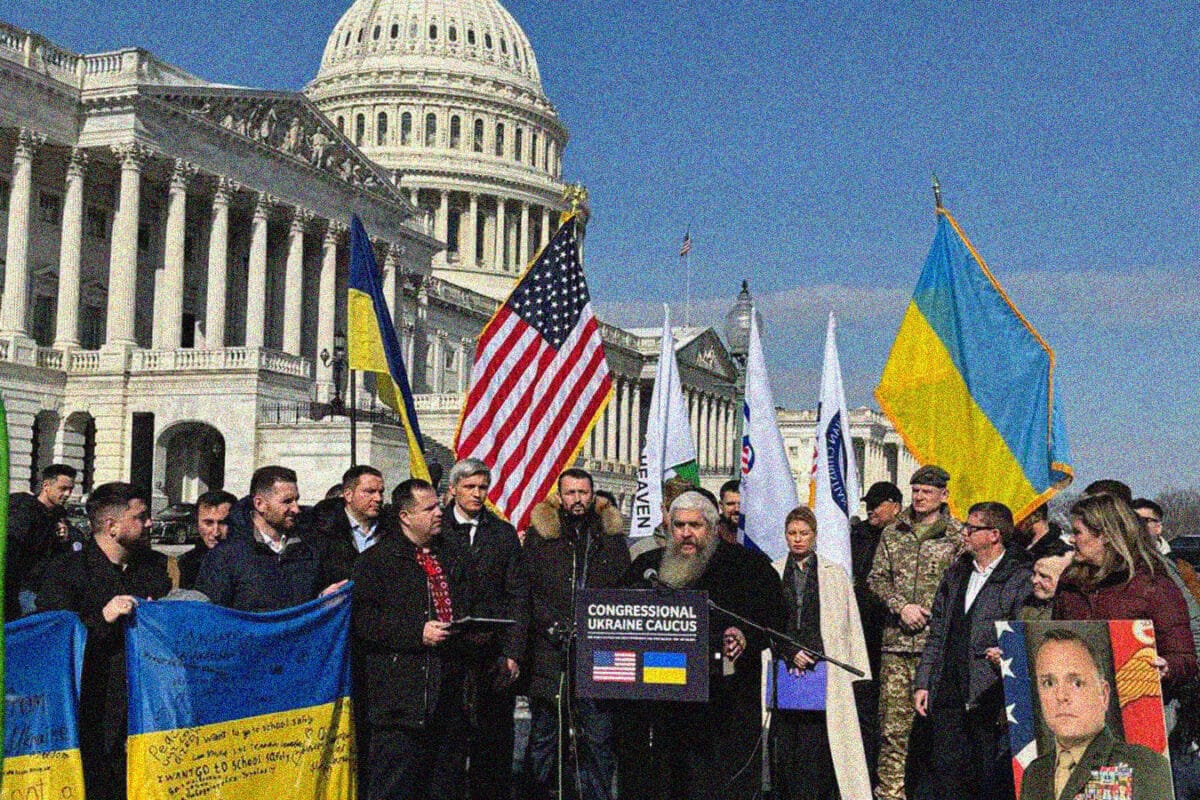
More important than the list is his formulation, which can be highlighted as a key quote:
“Together with the chaplains — we are the spiritual voice of Ukraine, and we will reach every kind heart in Washington and throughout the USA!”
This is not just an emotional phrase. It explains why the religious and chaplaincy line has become part of Ukrainian diplomacy: it is a language that is heard where dry politics ‘doesn’t work’.
February 5, 2026: “Very Tight Schedule” and the National Prayer Breakfast
The next day, February 5, 2026, he describes the trip as an almost continuous stream of meetings and speeches. It is specifically mentioned that during these days the National Prayer Breakfast is taking place in Washington — a massive event attended by thousands of guests from across the country: believers, community leaders, public activists, and businesses.
In this message, the focus is not on the “event picture,” but its practical goal: after the speeches, people of different levels approach him — and not just express support, but begin to specifically ask what is happening in Ukraine and how they can help.
A quote conveying his logic:
“After my speeches, different people approach me, from large businessmen to congressmen and American officials. They begin to sincerely take an interest in the situation in Ukraine and want to personally come here to see everything with their own eyes and understand how and how they can help.”
He directly writes that after completing the working trip he plans to organize such visits. In his understanding, this is one of the most effective ways to turn sympathy into action: returning home, people become “friends and advocates of Ukraine” — they tell not “from the feed,” but from personal experience.
February 6, 2026: Event in Congress and the Topic of Abducted Children
In the publication from February 6, 2026, the rabbi reports on participating in an event in support of Ukraine in the US Congress, organized by the movement ALLATRA and Pastor Mark Burns. He highlights Burns in a separate paragraph, explaining why he emphasizes him: the pastor, according to him, came to Ukraine by invitation, saw everything on the spot, and after that became a “friend and advocate of Ukraine” in the American public sphere.
He also mentions the presence of Harry Tabakh, a US Navy Captain 1st Rank, who, as stated, spends a lot of time in Ukraine, engages in volunteer activities, and helps wounded defenders.
But the center of his speech is the most painful topic, which he chooses as a “striking argument” for the American audience:
“In my speech, I spoke about the most painful: one of the most terrible crimes of Russia — more than 20,000 Ukrainian children who were literally abducted and forcibly taken to the territory of the Russian Federation. About children who are being stripped of their Ukrainian identity, forced to forget their native language, culture, and homeland.”
And further — a direct appeal to politicians, public leaders, and businesses in the USA to come to Ukraine and see the truth with their own eyes. Here his style is extremely direct: not “support us,” but “come and see.”
February 7, 2026: Ukrainian Prayer Breakfast and Psalm of David
In the message from February 7, 2026, the rabbi describes the moment of his speech at the Ukrainian Prayer Breakfast in Washington. He emphasizes the finale — a prayer with the Psalm of King David:
“Today in Washington, at the Ukrainian Prayer Breakfast, I concluded my speech with a prayer — the Psalm of King David.”
For the American audience, such a gesture is not a “religious detail,” but an understandable symbol: the Ukrainian theme is presented not only as geopolitics but as a moral test.
February 8–9, 2026: Gala Evening, Public Gratitude to the USA, and “I’m Leaving Washington”
In the publication from February 8, 2026 (according to your fragment — “19 hours ago”), he writes about the prayer breakfast and the large gala evening within the framework of Ukrainian Week in Washington. There, according to him, were senators, congressmen, diplomats, representatives of big business, and opinion leaders. He spoke from the stage, thanked the American people for supporting Ukraine, talked about the need to help further and more, and offered a prayer for Ukraine right on stage.
The most controversial and at the same time noticeable detail, which he specifically notes by the date of this block, is the music played by the organizers:
“…and the organizers also played my song ‘Donald Trump It’s time to fight’ in front of all the guests.”
Mentioning Donald Trump in the track title is clearly aimed at the American internal agenda: it’s a way to “hook” the audience and make the topic of Ukraine part of conversations after the event — in the corridors, offices, media.
And in a short final speech from February 9, 2026, he sums up the trip without long constructions, almost conversationally. Below are key fragments, as close as possible to his intonation:
“I am leaving Washington now, hospitable Washington. Ukrainian Week went well: many meetings, many good people, friends of Ukraine.”
“I am sure: when we convey the truth — the truth will drive out lies. I talked to people and saw how even those who did not understand what was happening in Ukraine change.”
“I am returning to Ukraine in a few days and am very much looking forward to returning. I know how missiles are attacking Ukraine now, I know how cold you are… but my heart is with you, and the warmth of our hearts will melt this cold.”
And the final formula — already addressing two audiences at once, Ukrainian and American:
“Glory to Ukraine! God bless America!”
For the Israeli reader, this trip is also important because the Chief Rabbi of Ukraine speaks not as a “separate voice of religion,” but as one of the prominent public representatives of the Ukrainian Jewish community — a community that has stood shoulder to shoulder with the entire Ukrainian people since the first days of the war.
And when he talks about truth, pain, and the need for help, it is not a parallel agenda, but part of Ukraine’s overall struggle against Russian, Putin’s aggression — on the streets, in diplomacy, in the army, and in human stories. That is why NAnews — News of Israel | Nikk.Agency records such trips not for the sake of “pictures,” but as a signal: who and with what words keeps Ukraine in Washington’s focus, and why the moral language is sometimes stronger than dry formulas.
What This Shows — With Dates and Without Slogans
If you compile the publications from February 4, 5, 6, 7, 8, and 9, 2026 into one text, a fairly clear picture emerges. It is an attempt to lead the Ukrainian theme in the USA through three channels simultaneously:
Public political platforms (Capitol, Congress, meetings with legislators).
Religious formats (National Prayer Breakfast and Ukrainian Prayer Breakfast).
Personal diplomacy (conversations and invitations to come to Ukraine to “see with their own eyes”).
And in all three cases, he uses the same strategy: not to ask “in general,” but to press on specific human points — responsibility, truth, abducted children, personal impression from what is seen.
This is what his Washington looks like this week — by dates, by events, and by the words he himself chose for them to be repeated further not only by Ukrainians.
The trip to Washington February 4–9, 2026 shows how “long-term support” for Ukraine is being built today: not only through offices and negotiations but also through direct conversation with American society — where decisions are born from trust, faith, and personal experience.
The Chief Rabbi of Ukraine in this story sounds like the face of the country’s Jewish community, which does not stand aside and does not “observe from the sidelines,” but stands together with the entire Ukrainian people. Shoulder to shoulder — against Russian, Putin’s aggression, against attempts to normalize the war, against fatigue and indifference that gradually erode support from a distance.
His bet is simple and stubborn: to show the truth, to talk about the most painful topics, to bring people to understanding not through headlines, but through personal meeting and personal responsibility. And then everything comes down to a question that is not solved by slogans: how many people in the USA are ready to move from sympathy to action — and keep Ukraine on the agenda as long as it is really needed.
