
In the Kyiv Veteran Hub (Ukrainian public organization and support space for veterans, military personnel, and their families), a pre-screening of the Israeli series “Hatufim” (“חטופים”) took place. After the first episode, the audience stayed in the hall — a discussion began about returning from captivity, long adaptation, and why families often find themselves on the front line no less than the military.
The screening became part of a cultural project initiated by the Embassy of the State of Israel in Ukraine.
“For Israeli artists, war is not an abstract topic, but a personal experience,” –noted on February 12, 2026, the Ambassador of the State of Israel in Ukraine Michael Brodsky, emphasizing that these themes resonate especially with Ukrainian society today.
The series is being prepared for a wider audience — Ukrainian dubbing and future broadcast on the TV channel STB have been announced. This means that the conversation will move from the expert environment into ordinary homes.
How the project was born and why it is still being analyzed
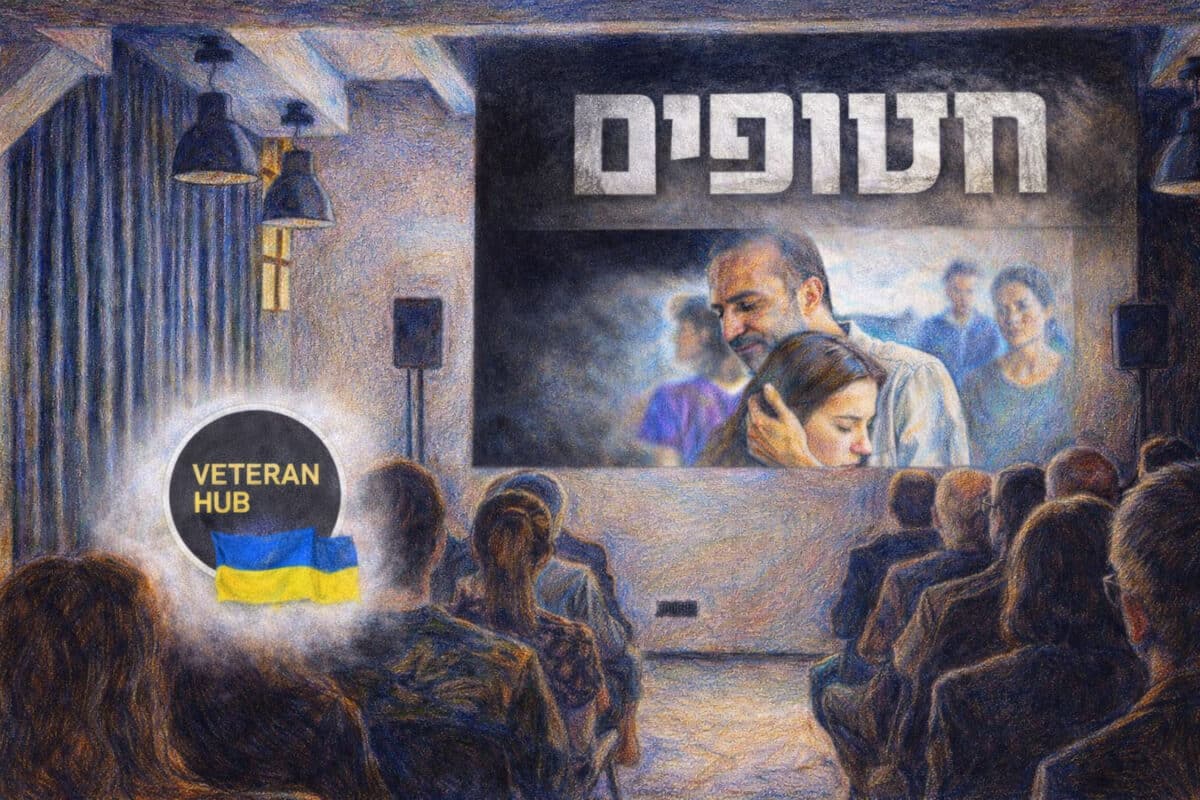
“Hatufim” (Hebrew חטופים, Hatufim / Khatufim, literally — “abducted”, “captured”; international title — “Prisoners of War”) is an Israeli television drama series created by director, screenwriter, and producer Gideon Raff. The production was handled by the studio Keshet.
The first season was broadcast on Israel’s Channel 2 from March to May 2010. The second season aired from October to December 2012.
In 2013, Raff spoke about plans for a third season, but in 2015 admitted that its production seemed unlikely.
Already in 2010, the series received Israel’s main television award — the local equivalent of the “Oscar” — as the best drama series.
From the very beginning, it was clear: this was not just another war story. The project turned out to be much deeper — about trauma, memory, suspicion, broken relationships, and the impossibility of simply “coming home”.
International fate
Even before the broadcast in Israel, the program was acquired by 20th Century Fox Television.
Based on the original, an eight-season project “Homeland” appeared in the USA, which aired from 2011 to 2020 and became one of the most famous drama series of its time.
In India, a large-scale adaptation was created — a 110-episode TV project “P.O.W. – Bandi Yuddh Ke”, directed by Nikhil Advani, with Gideon Raff consulting on the production.
Despite its global career, many critics consider the Israeli original to be the most intense and personal. It is less about spy games and much more about a destroyed private life.
Main data about the project
Genre: psychological thriller, drama
Creator: Gideon Raff
Screenplay: Gideon Raff
Director: Gideon Raff
Starring:
Yoram Toledano
Ishai Golan
Assi Cohen
Yael Eitan
Mili Avital
Yael Abecassis
Adi Ezroni
Country of production: Israel
Original languages: Hebrew, Arabic
Number of seasons: 2
Number of episodes: 24
Episode duration: approximately 45–60 minutes.
Executive producers:
Gideon Raff
Liat Benasuli
Producer: Liat Benasuli
Cinematographer: Itai Neeman
Production: media group Keshet
Why the original is perceived more strongly than adaptations
International versions amplified the political scale, added intrigue of intelligence services and global threat.
The Israeli version remains intimate.
It keeps the viewer inside the family, inside the trauma, inside the silence after returning.
It is this closeness that makes it heavy — and therefore enduring.
Detailed plot: what happens on screen
Seventeen years later
The action takes place in 2008. Three Israeli soldiers disappeared during a secret operation in Lebanon. Seventeen years later, two return from Syrian captivity. The third — died.
At home, they are awaited by a national drama: cameras, flags, families, official speeches. Society wants an ending that can be shown in the news.
But the series begins right where a period is usually placed.
Returning to a foreign life
The wives lived almost two decades without their husbands. The children grew up. Relatives found new ways to protect themselves from pain — and new habits to live.
The freed face the fact that they were remembered, but no longer known. They themselves changed all this time, but no one saw how exactly.
Every step at home becomes an attempt to relearn how to be a person among relatives.
Between hugs and interrogation
While the country celebrates, the intelligence services begin their own work. Their task is to find out what happened in captivity, what contacts might have been, whether there is a threat.
The hero for the television picture turns out to be a figure of doubt.
And the series leaves the viewer inside this moral deadlock.
Why the screening in Kyiv became an event of a different scale
The goal is not a premiere, but a conversation
The organizers directly said: the example of “Hatufim” is needed to start a discussion about how people return, how they adapt to peaceful life, and what trials their families go through.
Participants of the round table emphasized — for Ukraine today, this is not only a cultural interest but a social necessity.
Words of the ambassador
Brodsky reminded that Israeli series have long been known to the world, many have heard of “Hatufim” and “Fauda”. The embassy, according to him, will continue to introduce the Ukrainian audience to Israeli culture further.
He separately emphasized: the themes raised in the project resonate especially with Ukrainian society today.
Where two experiences meet
Israel has been learning for decades to live with the return of captives, with their rehabilitation, with disputes within society about the cost of release and the cost of security.
Ukraine is now going through a similar path.
Therefore, attention to the series is no longer a television news.
It is here that the editorial office of NANovosti — News of Israel | Nikk.Agency sees an important process: the exchange of real, sometimes painful experiences between countries that have to rebuild life after trauma.
What is Veteran Hub and why the screening of “Hatufim” took place there
Veteran Hub https://veteranhub.com.ua/ — a Ukrainian public organization and support space for veterans, military personnel, and their families. It is a center where people seek help after service and after returning from war.
The platform works with several key areas:
psychological support,
social adaptation,
legal consultations,
educational programs,
employment assistance,
events for the veteran community.
Veteran Hub was opened in Kyiv in 2018 as the first public center of its kind. Its task is to help people transition from military experience to civilian life and at the same time explain to society the difficulties faced by those who have returned.
Why this venue is suitable for “Hatufim”
The series tells about soldiers who returned home after many years of captivity and about how difficult it is to rebuild relationships with family and society.
This is literally the same issue that Veteran Hub deals with daily: return, reintegration, trauma, life “after”.
Therefore, the pre-screening there is not a cultural formality. It is an opportunity to immediately translate the artistic story into a practical conversation between specialists, veterans, and families.
In such a space, the series is perceived not as a television premiere, but as an occasion to talk about real adaptation mechanisms.
What the viewer should understand in advance
This is a heavy and slow story.
There is little heroism and many everyday cracks.
There is no promise that everything will become easier.
But it is this honesty that makes the story alive — and explains why people return to it again when they need to talk about the difficult without slogans.
Release formally ends captivity.
And then begins the long road home — and it is different for everyone.
