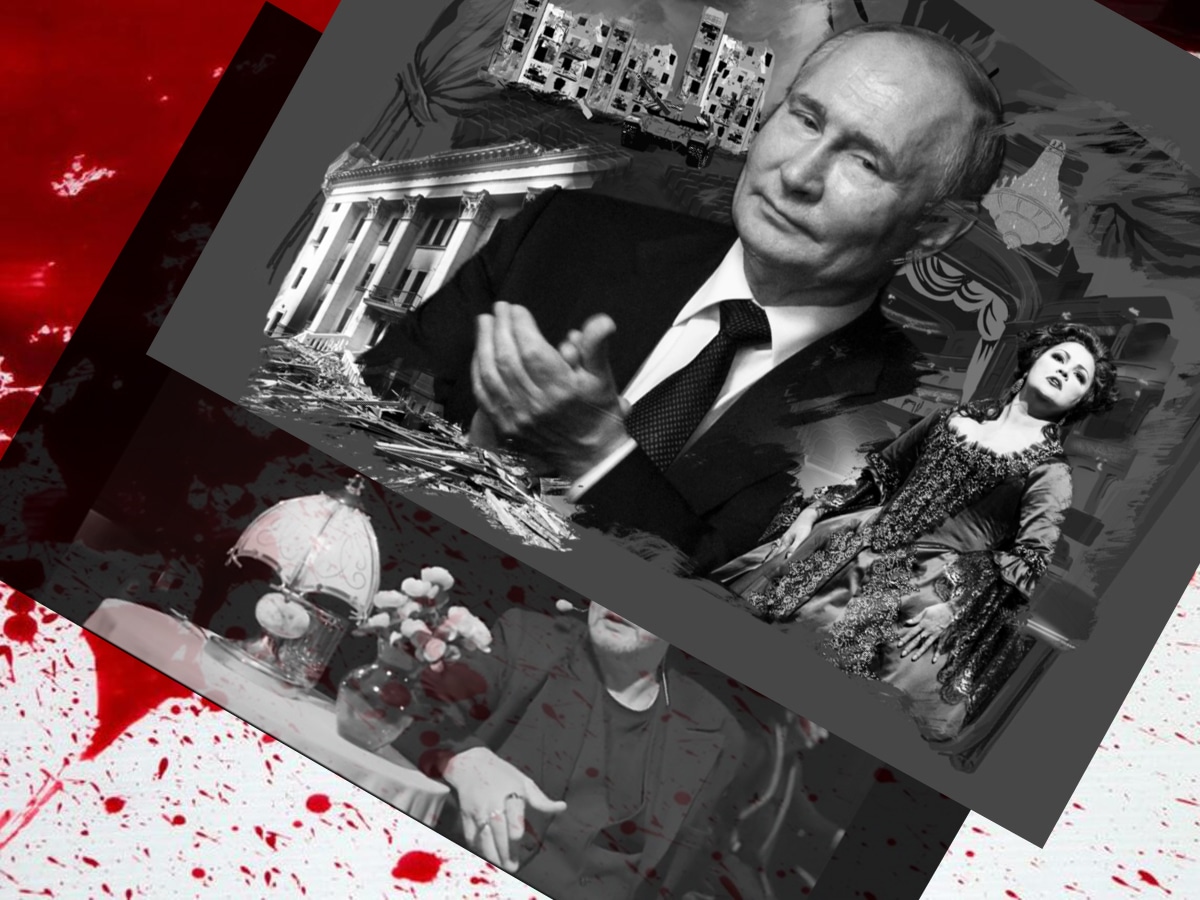
“When active cultural activities by Russian artists take place in your country, it immediately signals disinformation and the preparation of some act of aggression.” – “This is our own experience,” – Minister of Culture of Ukraine Mykola Tochitsky.
“putin is separate… rockets and bombs are separate, and opera is separate,” said Yevhen Lavrenchuk.
“But in reality… there is a connection in everything, the most direct connection.”
The EU Commissioner for Culture Urged European Theaters Not to Resume Cooperation with Supporters of the War Against Ukraine
On June 6, 2025, Politico published an interview with the EU Commissioner for Culture, Glenn Micaelef. He stated:
“European stages must not provide a platform to those who support this war of aggression against Ukraine.”
Micaelef, the EU’s culture chief, added that even if a performance is entirely privately funded:
“That should not stop us from making very strong political statements that we should not give any space to those who support these aggressive wars.”
“We must work more actively and diligently with our Member States to ensure this does not happen,” he added.
Politico writes:
“Even when Russian armies invaded Europe in the last century, its music flowed through the continent’s theaters and concert halls, and passionate conductors and glamorous sopranos became leading ambassadors of Russian cultural power.
When the Soviet Union collapsed, Russian operas and ballets still held a sacred place in Europe; the same was true after Moscow annexed Crimea in 2014. But all this came to an abrupt halt in the winter of 2022, when the Kremlin launched its full-scale invasion of Ukraine.
In solidarity with Kyiv, the classical music world canceled Russian concerts, stopped performing foundational works like The Nutcracker and Swan Lake, and excluded performers publicly linked to President putin — all part of a broader derussification of European art.
Yet three years later, some of Russia’s biggest stars are quietly returning to orchestras and stages across Europe.
This is a victory for Moscow, as, according to critics, it hopes to end its global isolation by using Russian high art and culture as a weapon of soft power.”
“A Matter of Security”: Arguments from Ukrainian Directors
The Ukrainian art scene has wholeheartedly backed the Commissioner’s call. Yevhen Lavrenchuk, appointed director of the opera Rinaldo in Jerusalem, withdrew from the project in July 2025 after seeing two Russian singers on the playbill. He explained:
“For us, Ukrainians, a boycott of all things Russian is not a matter of culture and art, it is a matter of security.”
“Russia has for centuries pursued a policy of soft power through art and culture… and forcibly imposed the Russian language and Russian culture,” he added.
Although some performers argue that art and politics should be separate, Lavrenchuk insisted there is no simple way to divorce Russia’s military machine from its use of culture as a tool of soft power.
In his view, over centuries Russia “has destroyed millions of people, yet still become famous for its brilliant ballet and opera”.
“putin is separate… rockets and bombs are separate, and opera is separate,” he said. “But in reality… there is a connection in everything, the most direct connection.”
The Return of Russian Stars and Europe’s Reaction
Despite thousands of cancellations over three years, the following are scheduled to return to European stages in 2025–2026:
- Valery Gergiev with the Mariinsky Orchestra at Spain’s Ibercámera Festival, funded in part by EU grants.
- Anna Netrebko — after her February 2025 performance with Palm Beach Opera, she has announced concerts in London and Paris.
Minister of Culture of Ukraine Mykola Tochitsky and Commissioner Micaelef warn that the return of these artists could be exploited by the Kremlin to undermine sanctions and spread disinformation.
“When active cultural activities by Russia occur in your country, it immediately signifies disinformation and the preparation of some act of aggression,” he said.
“This is our own experience.” – Mykola Tochitsky
The Role of Russia’s “Soft Power”
For centuries, Russian opera and ballet have served as the Kremlin’s “soft power.”
In 2008, conductor Valery Gergiev held a propaganda concert in Tskhinvali immediately after South Ossetia was seized. As the audience waved Russian and Ossetian flags, Gergiev conducted Shostakovich’s Leningrad Symphony, a popular patriotic work and symbol of resistance to fascism. He later appeared in a 2012 televised campaign ad praising putin’s leadership and signed an open letter supporting the Kremlin’s annexation of Crimea in 2014.
After Russia’s full-scale invasion of Ukraine in 2022, orchestras and theaters from Milan and Munich to Rotterdam and Vienna dropped him. He has since performed in China and Iran but remains under Ukrainian sanctions and has not set foot in Europe since the invasion began.
Today, the return of these performers to European stages threatens to strengthen Moscow’s position once again.
Israel’s Cultural Scene: Neutrality and …
At NAnews, we are convinced that Israel’s formal neutrality on the issue of a cultural boycott today looks immoral.
There are, in fact, no specific laws requiring theaters and concert halls to refuse collaboration with artists who call for putin’s aggression: only general norms apply –
- Prohibition of incitement to violence (Criminal Code). Public calls for aggression are legally punishable, but in practice these provisions are rarely applied to artists or cultural events and are primarily intended to counter terrorist propaganda and mass disorder.
- Basic Law: Human Dignity and Liberty. This constitutional act guarantees freedom of creativity and speech, so any state intervention in the repertoire of theaters and concert halls must strictly comply with the principles of proportionality and necessity.
- Anti-Boycott Law (Anti-Boycott Law, 2011). It prohibits calls to boycott Israel and Jewish organizations but does not place any restrictions on inviting or refusing to invite foreign artists.
All of this leaves cultural institutions alone with the dilemma of whether to invite onto their stages those who justify violence.
But while we debate legal nuances, innocent people are dying across the border: Russia is destroying cities and killing civilians — among them hundreds of families in Kharkiv, Mariupol, Odesa, Dnipro, and other Ukrainian cities, including Jewish families.
Schools, hospitals, synagogues, and kindergartens are being turned into ruins. Children and adults from various communities are losing their homes and forced to flee. Every bus of refugees is a reminder that “neutrality” here equals inaction in the face of monstrous putin’s aggression.
Leading democracies have already added a cultural boycott to their sanction toolkit: they refuse to cooperate with those who justify war crimes. Israel, whose history is full of lessons on where propaganda and impunity for the aggressor lead, must follow their example. The absence of clear internal standards creates a sense of double standards and undermines our international credibility.
We call on Israeli theaters and concert halls to develop their own ethical codes: to bar from their stages performers who publicly call for putin’s aggression, to include in artist contracts a commitment not to spread propaganda, and to remember the real human victims — peaceful families of all nationalities, including Jewish.
Only in this way can Israel confirm its role as a reliable defender of freedom, human rights, and international solidarity.