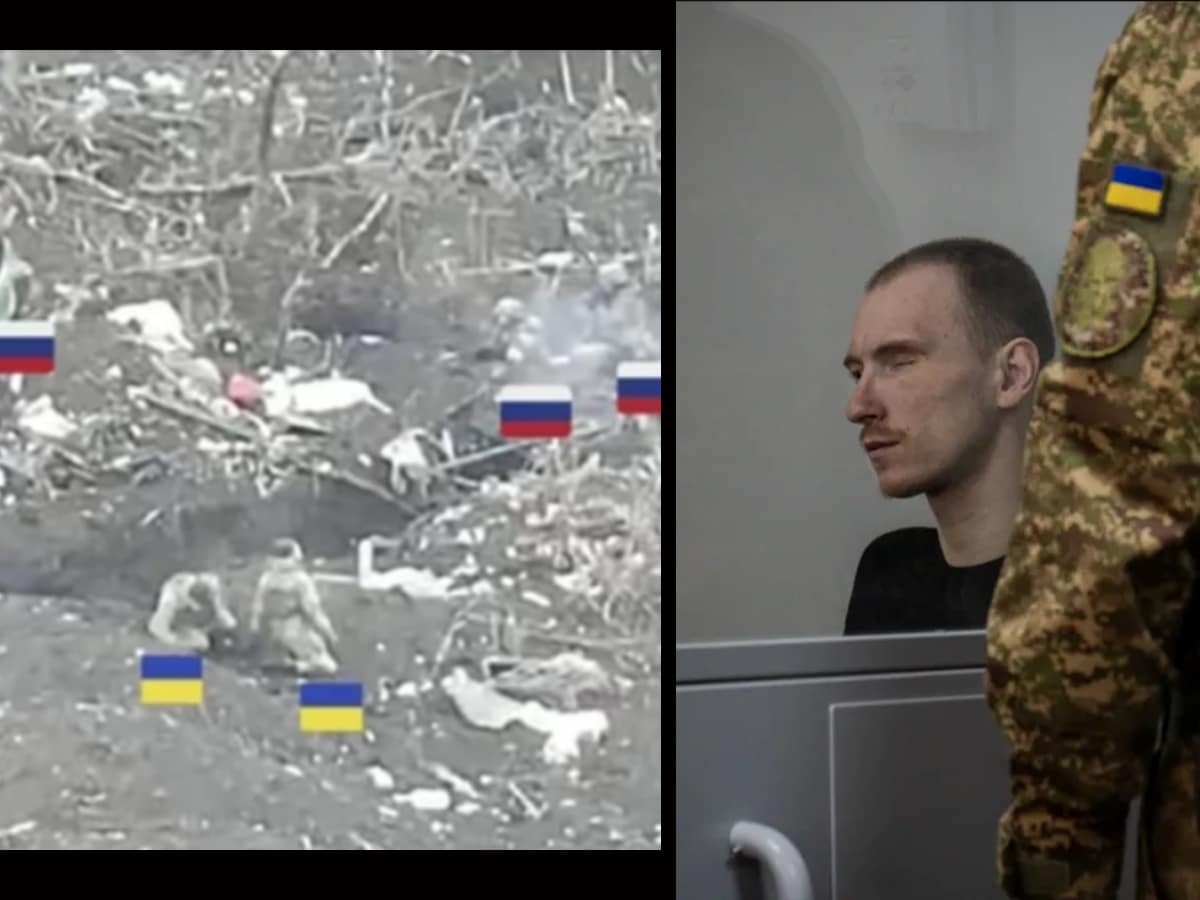
A Russian soldier is on trial for the execution of a Ukrainian prisoner of war. Even his fellow servicemen testified against him.
This trial is the first of its kind in Ukraine. According to Ukrainian authorities, since the beginning of the full-scale invasion, Russian forces have executed at least 124 prisoners of war on the battlefield. However, Kurashev is the first person to be captured and held accountable for this crime. His case is one of the few among tens of thousands of open war crimes cases where the suspect was captured and brought to court.
BBC reported on this on June 15, 2025.
If Kurashev is found guilty, he faces life imprisonment. At the end of his conversation with BBC, he said he had no real vision of the future other than wanting to return to Russia.
“At least I’ll have a disability,” he said, referring to the loss of an eye and the benefits it might bring. “I won’t have to be a vagrant anymore.”
Ukraine is demonstrating exceptional seriousness in investigating and prosecuting war crimes. The SBU’s investigation into Kurashev’s case includes over 2,000 pages of evidence. Each witness underwent a video reenactment of the incident at a Ukrainian army training ground. In court, prosecutors and judges are making every effort to ensure that Kurashev understands his rights, has access to an interpreter, and the opportunity to cross-examine witnesses — though he has so far declined to do so (his state-appointed lawyer declined to comment to the BBC, limiting himself to administrative matters and clarifications in court).
A Trial Without Precedent
The first-ever trial in Ukraine of a Russian serviceman — Dmitry Kurashev — is underway in Zaporizhzhia. He is accused of executing Ukrainian POW Vitalii Khodniuk, a 41-year-old veteran with the call sign “Pingvin.”
The event took place in January 2024 during combat on the Zaporizhzhia front. According to prosecutors, Khodniuk emerged from a trench unarmed, hands raised, and was shot dead with an assault rifle.
Initially, there were two suspected executions. One witness claimed another Ukrainian soldier with the call sign “Hrynch” was beaten to death with a shovel. But the SBU could not prove this.
“The polygraph did not confirm the information,” the investigator said.
Key Facts and Figures
| Parameter | Value |
|---|---|
| Accused | Dmitry Kurashev (“Stalker”) |
| Victim | Vitalii Khodniuk (“Pingvin”) |
| Date of Incident | January 6, 2024 |
| Court | Zavodskyi District Court, Zaporizhzhia |
| Documented POW executions | 124 cases |
| Evidence | Over 2,000 pages |
Testimonies from Fellow Soldiers
Three former inmates from the Storm-V unit, where Kurashev served, testified against him:
- Dmytro Zuiev: saw Khodniuk kneel unarmed — then heard gunfire.
- Oleh Zamiatin: is convinced Kurashev fired the shots — no one else was near.
- Kostiantyn Zelenin: said gunfire came from the right, where “Stalker” was standing.
Kurashev admitted guilt in court but later said he did so only to speed up a potential prisoner exchange.
Who is Dmitry Kurashev?
Kurashev grew up in an orphanage in Gremyachinsk. He had two prior criminal convictions in Russia and was released to fight in the war. His unit, Storm-V, was composed entirely of ex-convicts. According to Kurashev:
“Training lasted 21 days; everyone was drunk. We were told not to take prisoners.”
How the Investigation Unfolded
After the battle, Kurashev and other survivors surrendered. Ukrainian troops found Khodniuk’s body face down, unarmed. Due to the front-line location, the SBU couldn’t retrieve the body immediately — it remained there for about two months.
The investigation included 8 POW interrogations, radio intercepts, and analysis of social media and phone data. The SBU’s file spans over 2,000 pages, including video reenactments.
Challenges of Evidence
The case became one of thousands of war crimes under investigation. Ukraine lacks a dedicated war crimes court; trials are held in local jurisdictions — here, the Zavodskyi District Court. Prosecutor Mykyta Manevskyi had no prior experience with war crimes before the full-scale invasion.
According to Manevskyi, the condition of the body and environment made forensic analysis impossible:
- Bullet trajectory couldn’t be determined,
- No drone footage exists,
- The case relies almost entirely on testimony.
The Witness Dilemma
All witnesses are prisoners of war, some of whom changed their stories. One admitted to holding a personal grudge against Kurashev.
International law expert Serhii Vasyliev warned:
“POWs are a vulnerable category of witnesses. Their testimonies may be influenced by hopes of exchange or leniency.”
Sentencing Prospects
If convicted, Kurashev will serve a sentence under Ukraine’s civilian code. According to Yurii Bielousov, head of the War Crimes Department at the Prosecutor General’s Office:
“This is not revenge — it’s justice on behalf of the victims.”
However, a prisoner exchange is possible — potentially in exchange for Ukrainian civilians held by Russia:
“The legal system is facing a moral dilemma: justice versus saving lives.”
Orders to Kill: Chain of Command
Testimony indicates orders to take no prisoners were issued before the attack. Investigators plan to pursue mid- and high-level commanders.
UN records confirm 79 executions since August 2024 and intercepted communications of Russian officials approving such actions. Dmitry Medvedev publicly called for total extermination.
The Verdict Is Still Ahead
The trial of Dmitry Kurashev is ongoing. He faces a life sentence. As BBC notes:
“This is one of the rare cases where a war crime did not go unpunished.”
Vitalii Khodniuk, a veteran since 2015, was buried two months after his death. His coffin was greeted by townspeople kneeling along the road.