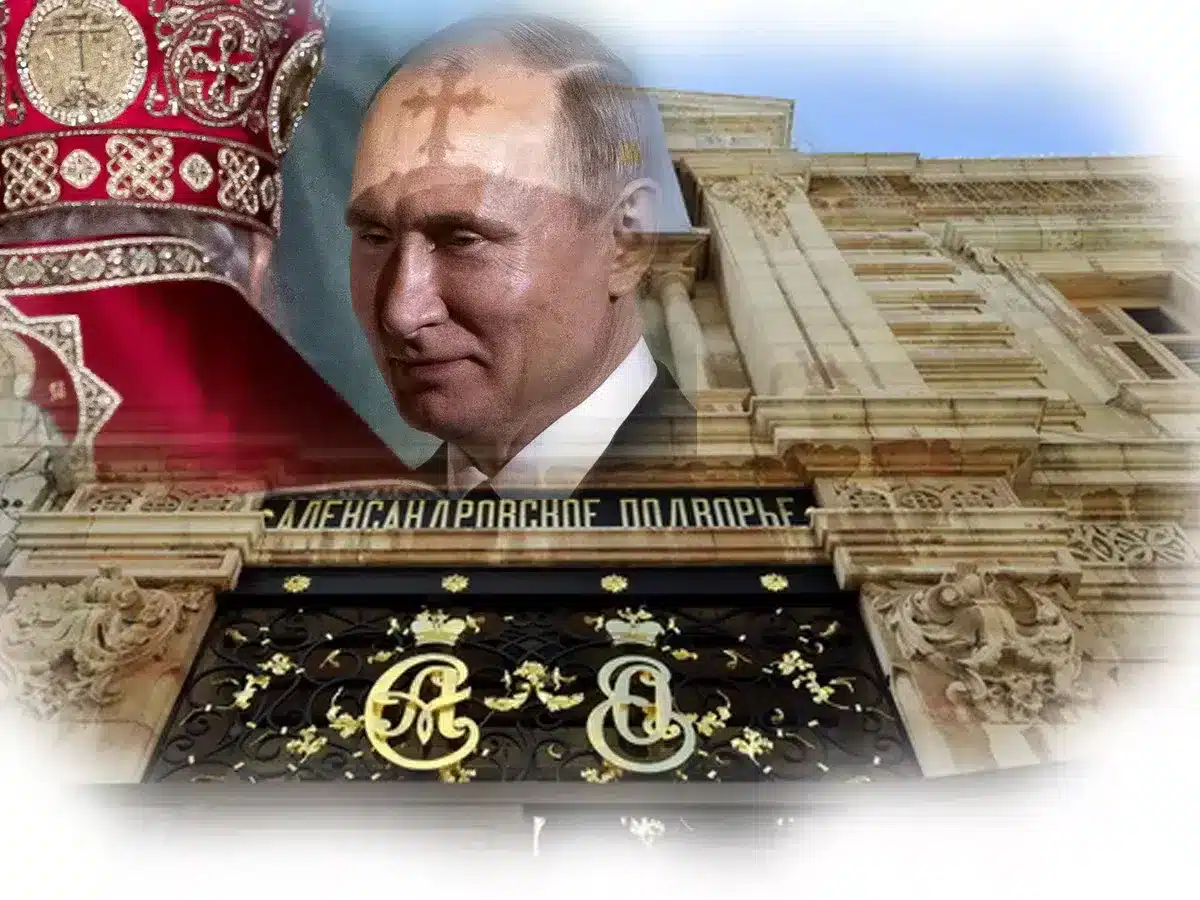
The Russian Orthodox Church (ROC) is actively used as an instrument of Russian foreign policyexpanding its influence through religious, “humanitarian” and “educational” projects around the world.
According to the British expert Samuel Ramani, The Russian Orthodox Church plays a key role in promoting Russian interests in Africa, the Middle East and Israel.
Ramani, a researcher at Britain's Royal Services Institute (RUSI), argues that Western countries should view the Russian Orthodox Church as one of Russia's soft power mechanisms, along with tools such as the Wagner Group and the Russian propaganda channel RT.
ROC as an instrument of Russian geopolitics
The Russian Orthodox Church not only supports the Orthodox population in countries where it is needed, but also actively promotes the spread of Russian influence.
This is especially true in Africa and the Middle East, where the church helps the Russian government advance its economic and political interests. According to Ramani, the Russian Orthodox Church largely acts as soft power, creating cultural and educational centers, expanding its network of parishes and strengthening ties with local political elites.
“The West should treat the Russian Orthodox Church like the Wagner Group or RT“says Ramani, emphasizing the importance of perceiving the Russian Orthodox Church as part of Russian foreign policy.
How does the Russian Orthodox Church affect Africa and the Middle East?
The Russian Orthodox Church is active in countries such as the Central African Republic, Sudan and Ethiopia, where new parishes are opened, humanitarian projects are carried out and cultural centers are built. In turn, in countries such as Syria and Lebanon, the Russian Orthodox Church continues to strengthen its position through the support of local Orthodox communities.
Example: Africa
- Goals of the Russian Orthodox Church: Creation of new parishes, humanitarian assistance, support of local authorities.
- Support from Russia: Russia actively supports the Russian Orthodox Church in these countries, including material assistance and diplomatic support.
- Influence on politics: In countries where the Russian Orthodox Church is active, Russia is strengthening its political and economic ties.
Example: Middle East
In the Middle East, the Russian Orthodox Church continues to develop its position through the Jerusalem Patriarchate. This is an important element of Russian diplomacy in the region, through which Russia “maintains relations” with Israel and with neighboring countries such as Jordan and Lebanon.
“The Jerusalem Patriarchate owns about 18% of the land in Jerusalem, including the land on which important buildings such as the Knesset and the residence of the President of Israel are built,” Ramani reports.
The story of the Alexander Metochion: Russia’s geopolitical ambitions
One of the most striking examples of Russian interference through the Russian Orthodox Church is the situation with the Alexander Metochion in Jerusalem. This holy place, which historically belonged to the Russian Empire represented by the House of Romanov, became the subject of intense “diplomatic” negotiations.
More details – Alexander's Metochion in Jerusalem: Russia is again trying to “squeeze” the Holy Land of Israel.
In 2024, Israeli Prime Minister Benjamin Netanyahu again raised the issue of returning the compound to Russia, despite current political and military challenges.
“The work to evaluate the transfer of the Alexander Metochion continues, despite the political difficulties,” said Sergei Stepashin, chairman of the Imperial Orthodox Palestine Society (IOPS).
This situation highlights not only the importance of church property for Russian diplomacy, but also the importance of the role of the Russian Orthodox Church in Russian foreign policy. Russia's desire to return the Alexander Metochion is part of a broader process of strengthening the position of the Russian Orthodox Church in the region.
The influence of the Russian Orthodox Church on Israeli politics
For Israel, the issue of interaction with the Russian Orthodox Church and its influence on the country is of particular importance, given the strategic location of Jerusalem and its importance as a religious and political center. The Russian Orthodox Church, through the Jerusalem Patriarchate, actively participates in the religious life of Israel and has influence on political processes, especially in the context of Christian and Orthodox communities.
Russian policy towards Israel depends heavily on maintaining close ties with the Orthodox Church. In this regard, relations between Israel and the Russian Orthodox Church are becoming an important aspect of Israeli foreign policy, influencing both diplomatic ties and internal religious issues.
The West's position and conclusions for Israel
Samuel Ramani notes that Western countries should be more attentive to the activities of the Russian Orthodox Church, perceiving it as an integral part of Russian foreign policy. He emphasizes that the West should approach the Russian Orthodox Church in the same way as other Russian soft power instruments such as the Wagner Group and RT. This approach will contribute to a more objective perception of the Russian Orthodox Church and its actions in the international arena.
For Israel, this issue is especially relevant in the context of its role in the Middle East. Given the importance of relations with Russia and the actions of the Russian Orthodox Church in the region, Israel must take into account all aspects of the influence of the Russian Orthodox Church on local and global politics.
Table: The role of the Russian Orthodox Church in global geopolitics
| Region | Actions of the Russian Orthodox Church | Influence on politics | Example of countries or objects |
|---|---|---|---|
| Africa | Opening of new parishes, humanitarian aid | Increasing political influence | CAR, Sudan, Ethiopia |
| Middle East | Strengthening positions through the Jerusalem Patriarchate | Religious and political influence | Israel, Jordan |
| Israel | Interaction with government agencies and diplomacy | Strengthening Russia's position | Alexander's Compound |
Conclusion
The role of the Russian Orthodox Church in international politics, especially in the context of Africa, the Middle East and Israel, continues to grow. Samuel Ramani emphasizes that the West and Israel should more closely monitor the activities of the Russian Orthodox Church, considering it as an important element of Russian foreign policy.
Issues related to the Alexander Metochion and the strengthening of the position of the Russian Orthodox Church in Jerusalem are an important signal for Israel’s further diplomatic steps in relations with Russia.
Leave a comment in Telegram channel NAnews ↓ — Israel News