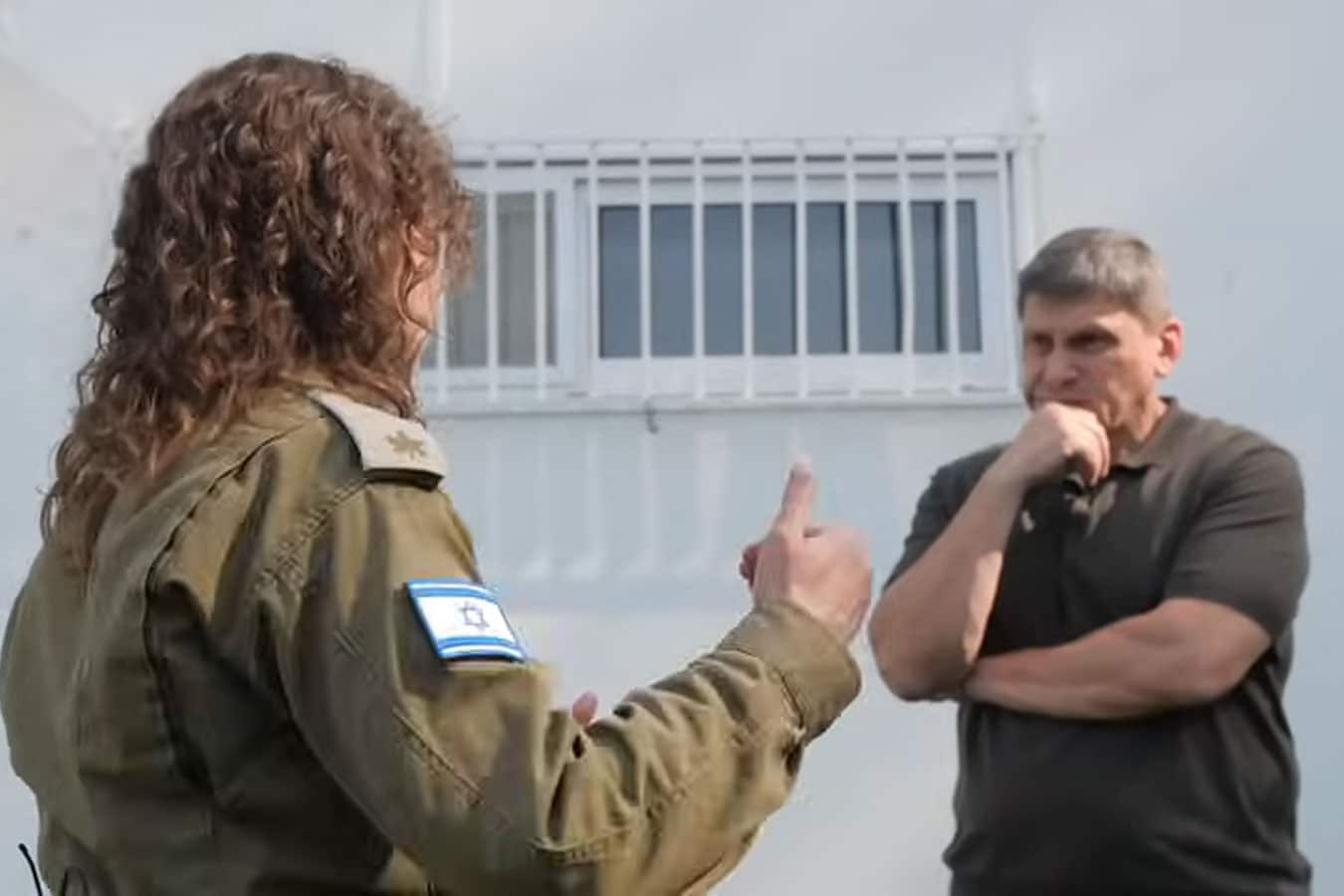
Ukrainian military correspondent Andriy Tsaplienko in Israel filmed a video report, shown on October 26, 2025, on the TSN (1+1) TV channel. The film became one of the most discussed stories of the week: it tells about the post-war reality of Israel, the fragile “Trump’s peace,” and why the country, having found Russian weapons with Hamas militants, still does not call Russia an aggressor.
In this material, Tsaplienko talks to a number of witnesses and participants in the events — each of them shows their fragment of Israeli reality.
The story features voices:
- Udi Goren, the cousin of the deceased rapid response team commander Tal Haimi, who talks about the return of his relative’s body two years after the Hamas attack.
- Adar Eylon, the sister of Shira Eylon, who died at the Nova festival, demanding an independent investigation into the tragedy of October 7, 2023.
- Anna Ukolova, IDF spokesperson, major, explaining how the Israeli army simultaneously repelled attacks from several directions — from Hamas, Hezbollah, and the Houthis.
- Idan Sharon-Kettler, IDF lieutenant colonel and deputy commander of the trophy collection unit, who shows weapons seized from militants — including Russian-made AK-103 and AK-104 rifles.
- Levi Tabachnikov, (https://t.me/leviathanstories) a participant in the Gaza operation and military analyst, claiming that Russian instructors helped Hamas in training drone operators and coordinating strikes.
- Sergey Auslender, (https://t.me/voinasordoy) Israeli military observer, who talks about “diplomacy with a smile and a knife behind the back” and explains why Israel is afraid to openly conflict with Moscow.
- Maoz Inon, entrepreneur and activist of the cooperation movement with Palestinians, whose parents were killed by a Hamas rocket and who believes in the possibility of peace according to Trump’s plan.
Everything known about these events is from the video material that Tsaplienko personally prepared while in the conflict zone on the border with the Gaza Strip.
Under the Flag of David
The first episode of the video is the funeral of the rapid response team commander Tal Haimi.
On October 7, 2023, during the Hamas attack, he hid his wife and three children in a shelter and died defending his village. Two years later, militants returned his body as part of a ceasefire.
On the screen — the flag of Israel with the Star of David and white flowers.
“We were lucky, Tal was able to be returned this week. We were able to bury him… We were finally able to get this peace,” says Udi Goren, the cousin of the deceased.
For the Haimi family, this is not the end, but the beginning of the memory process. For Israel, it is a symbol of how a truce becomes part of life, but not peace.
Voices from Tel Aviv
The next frame is the hostages’ square in Tel Aviv. People chant “Thank you, Trump.”
Many believe that it was the efforts of the former US president that helped stop the war. But the journalist shows: shots on the border are still heard, and peace remains fragile.
Among those who come here every Saturday is Adar Eylon, who lost her sister Shira at the Nova festival.
“Shira didn’t die immediately. She was shot in the neck and lived for several more hours, bleeding. Israeli guards found her, but she died on the way,” says Adar.
Each of her appearances in the square is an act of civil memory. She and other relatives of the deceased demand an independent investigation.
Their question is simple and painful: how could a country where security has become almost a religion allow such a tragedy?
When the Front is Everywhere
Tsaplienko reminds: on October 7, 2023, when Hamas broke through the border, Israel lost more than a thousand people in one day — mostly civilians. More than two hundred people were taken to Gaza as hostages.
Shortly after the attack, shelling began from Lebanon and Yemen.
Anna Ukolova, IDF spokesperson, says in the report:
“On October 7, the army mobilized on all borders. Already on October 8, the Houthis and Hezbollah began shooting at Israel. We prevented a lot of trouble that could have happened on other fronts.”
In the background of her words are shots of destroyed kibbutzim, exploded cars, and burned houses.
Russian Weapons on Israeli Soil
A separate block of the video is dedicated to the weapons that the Israelis found after the attack.
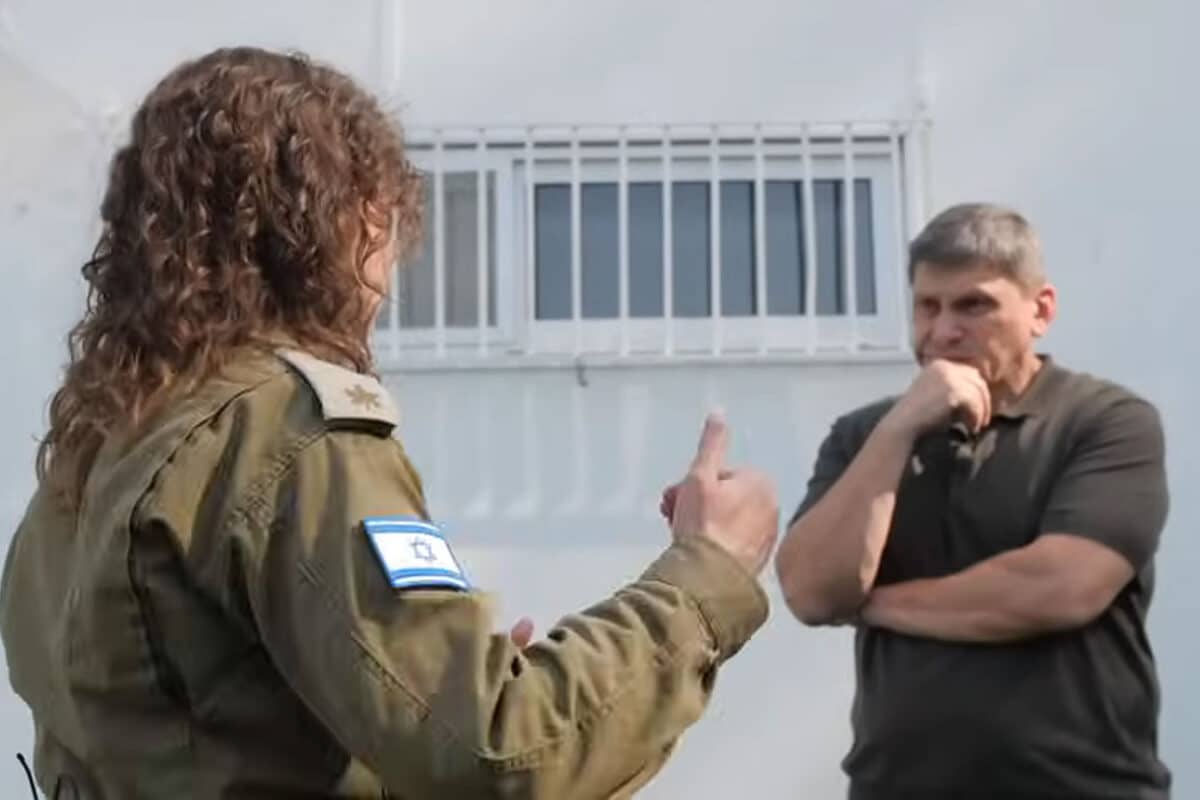
Idan Sharon-Kettler, IDF lieutenant colonel, deputy commander of the trophy collection unit, shows boxes and trophies:
“On October 7, we captured about a thousand ‘Kalashnikovs’ only on Israeli territory and about 500 RPG launchers. And if we talk about the shots for them, there were thousands.”
The screen shows the marking — “Made in Russia.”
“We found the AK-104 only in Lebanon. The AK-103 — partly in Israel, partly in Gaza itself,” he clarifies.
Israeli military do not comment on the supply routes, but in the video, Tsaplienko emphasizes: a significant part of the weapons is of Russian production.
“Instructors from Russia”
The journalist provides an interview with a participant in the Gaza operation and military analyst Levi Tabachnikov, who gives one of the most direct testimonies:
“I know that in the management of drones, at least there was information that Russian military instructors helped in the instruction.”
Later he adds:
“Russia is an ally of Iran. Hamas, Hezbollah, the Houthis — all these are Iran’s proxies. Hamas trained in Iran. And Iran cooperates with Russia.”
In the video, these words are accompanied by footage of destroyed equipment and underground tunnels. Military comments boil down to one thing — Moscow is not just an observer, but part of a system that supports Israel’s enemies through its allies.
Diplomacy “with a Smile and a Knife”
The most political episode of the video is the commentary of Israeli military analyst Sergey Auslender.
He directly talks about the contradiction between the facts and the government’s position:
“In general, that Russia is on the side of Hamas is quite obvious. Ten days passed after the massacre — and a Hamas delegation was received in Moscow. And not secretly — at the level of the deputy foreign minister.”
Auslender explains why Israel avoids direct accusations:
“In the Israeli leadership, there is a rational fear of Russia, inherited from the fear of the Soviet Union. They have the ability to harm us, and we don’t have much to harm them. We won’t bomb Moscow.”
He calls it “diplomacy with a smile on the face and a knife behind the back” — a phrase that became the most quoted after the release of the story.
Between Fear and Peace
Tsaplienko shows how fatigue and distrust coexist in society.
Many Israelis believe that Donald Trump’s plan brought “peace,” but in reality, it became just a pause.
Maoz Inon, an entrepreneur, activist of the cooperation movement with Palestinians, who lost his parents to a Hamas rocket, says on camera:
“The peace project in Gaza is only the first step. It has already yielded results — the exchange of hostages and a ceasefire. But this is just the beginning.”
However, most of the journalist’s interlocutors call what is happening not peace, but a truce.
Sergey Auslender sums up:
“The main contradiction of the conflict is that the Arabs do not want us to be here. The idea of two states has long been buried. From the river to the sea, Palestine should be Arab.”
Tunnels Where Fear Lives
At the end of the video, Tsaplienko descends into one of the destroyed Hamas tunnels.
His voice sounds off-screen:
“Militants, like the masters of the Kremlin towers, use hostages to hold on to power. And judging by the fact that they physically destroy their opponents, they are not going to give up power in Gaza. No matter what Trump promises.”
These words become the culmination. Israel received a truce, but not an answer — neither to the question about Gaza’s future nor to the question about Russia’s role.
Parallels with Ukraine
For Ukraine, Tsaplienko’s report is more than a foreign story. It’s a mirror.
Both Israel and Ukraine are fighting not just armies, but ideologies.
In both places, there is a war against those who do not recognize the right of the other side to exist.
Hamas for Israel is the same as what Russia has become for Ukraine: a force that destroys cities, justifying violence with “higher goals.”
Andriy Tsaplienko’s video “Why Israel does not openly condemn Russia and what happens after ‘Trump’s peace'” was shown on October 26, 2025, on TSN (1+1).
All facts, names, and quotes in the material are from this report, filmed in Israel, against the backdrop of the consequences of the war with Hamas and political decisions that shook the region.
Tsaplienko showed Israel without gloss and slogans — a country where people still live between war and peace, between memory and fear.
And this report became not just a story about GAZA, but a warning for Ukraine: peace built on concessions is never strong.
Who is Andriy Tsaplienko
Andriy Tsaplienko is a Ukrainian journalist, military correspondent, and documentarian known for his reports from the most dangerous places on the planet.
Born on October 12, 1968, in Kharkiv. He began his career in journalism back in the 1990s but gained fame after 2001 when he became a special correspondent for the “1+1” TV channel.
He worked in Afghanistan, Iraq, Kosovo, Chechnya, Georgia, Syria, and Donbas. His stories are distinguished by the fact that he not only records facts but seeks human stories amid the chaos of war.
Tsaplienko has become the face of Ukrainian journalism, combining reporter courage with honest analysis of events.
When Russia launched a full-scale invasion of Ukraine, he continued filming under fire.
His footage from Irpin, Mariupol, and Kharkiv went around the world, becoming part of the documentary chronicle of the war.
Awards and Books
Andriy Tsaplienko is an Honored Journalist of Ukraine (since 2011).
Laureate of the national television award “Teletriumph” and international military journalism competitions.
Author of several documentaries and books, including:
- “The Book of Changes” — a collection of reports and personal notes on the wars of the 21st century;
- “Chimera” — a novel in which he first comprehended the experience of a Ukrainian journalist living between war and peace;
- “Equator. Ten Years Later” — a series of essays on global conflicts and the fates of people caught on the front line.
His works have been translated into English and Polish.
Tsaplienko regularly speaks at international forums and media conferences, where he talks about modern warfare and the role of journalism as a tool of truth.