
There are interviews that sound like dry analytics.
And there are those where a person speaks as if they are still standing on the very ground where everything happened.
The conversation between Andriy Tsaplienko and Alla Mazur on November 15, 2025, is exactly one of those.
He had just returned from Israel, and it felt like he brought with him the air of Tel Aviv, the noise of protests near Jerusalem, stories of Ukrainian soldiers who have long lived in Israel and say: “We have seen all this before”.
We have already written about his visit to Israel – “Video: Andriy Tsaplienko in Israel: why the country does not condemn Russia and what happens after the ‘Trump peace’”
For the Israeli audience — especially for those living between two worlds, Ukrainian and Israeli — this interview became a bridge.
A bridge that needed to be built long ago.
When society is ahead of politics
The first thing Tsaplienko says:
“Do not confuse Israel as a society and Israel as a political elite.”
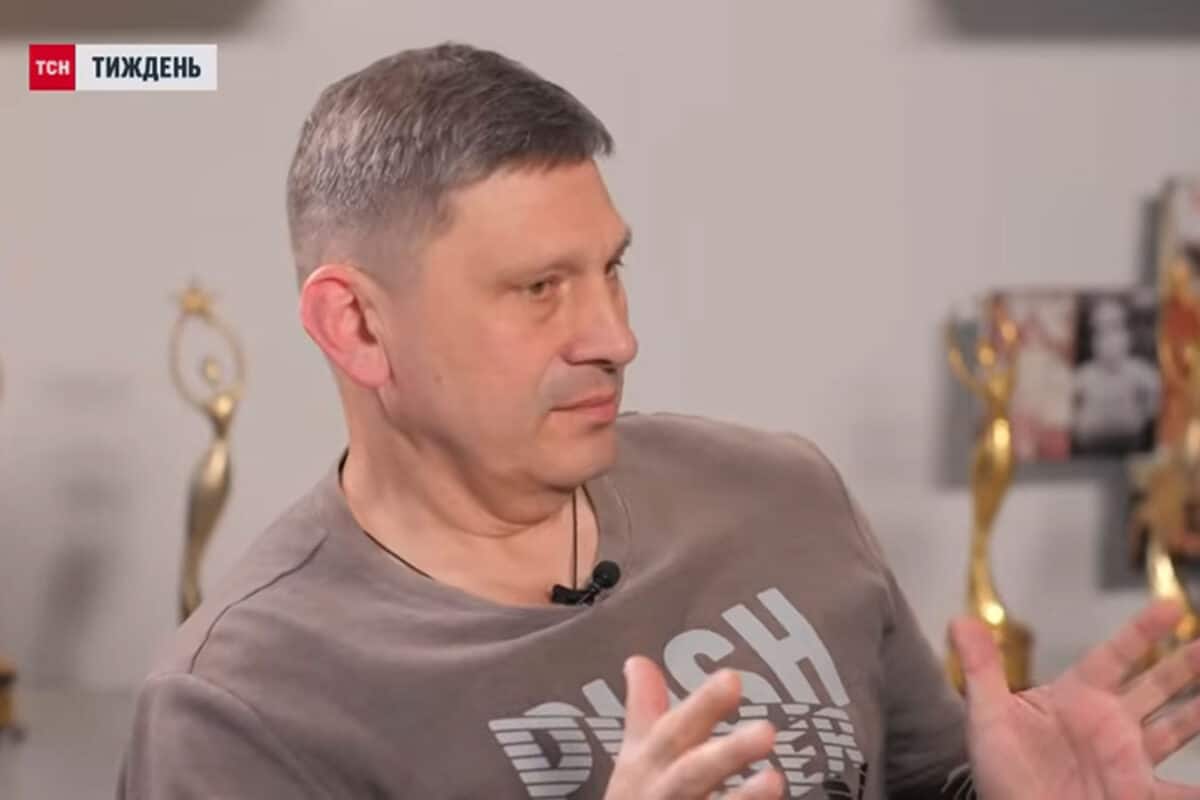
This is a phrase that many in Israel could say themselves.
Because on the ground, in the cities, near cafes, on car windows — there is much more Ukraine than it seems to those who only look at official statements.
— 68% of Israelis support Ukraine.
— Tens of thousands help financially, humanitarianly, informationally.
— Ukrainian flags are a real symbol of solidarity, not a political gesture.
But the state position is cautious. Sometimes painfully cautious.
And Tsaplienko explains it in a way that only people living near Syria or Lebanon understand:
“Israel is afraid to provoke Russia. Afraid that Moscow will activate what it controls in the region.”
For Ukrainians listening to this from Kyiv or Kharkiv, such an explanation may sound cold.
But for Israelis — especially those who remember rockets from Syria, Hezbollah, Iranian threats — this is reality.
Open support from below — and closed doors from above
Surprisingly, it was Tsaplienko’s report that showed what many in Israel know but rarely voice:
thousands of Israeli citizens of Russian origin are actively against the Kremlin;
a significant part of the reservists are of Ukrainian descent;
among the fighters who went through Gaza, there are those who openly say:
“Russia did not plan October 7, but it is involved.”
These voices in Israel are heard more and more often — and not only in Russian-speaking areas.
But when Tsaplienko says that only in June 2025 did Israel officially call Russia’s actions “aggression”, it sounds almost surreal.
For Israelis watching Ukrainian news, everything is clear:
Israel does not want a war with Russia.
For Ukrainians — it still hurts.
The point where two wars intersected
Surprisingly, it was a Ukrainian — a journalist familiar to the Israeli audience — who formulated what has long been in the air:
“Russia and Hamas should be compared, not Ukraine and Israel.”
In Israel, this was understood on October 7.
In Ukraine — back in 2014.
Tsaplienko explains:
both wars were beneficial to the Kremlin;
both diverted the world’s attention;
both hit civilians;
and in both, Russia tried to improve its positions.
When he recalls that Hamas went to Moscow — right after the massacre on October 7 — it evokes the same reaction in the Israeli audience as in the Ukrainian:
clenched fists.
The Yellow Line of Gaza and the “Trump Plan”: why it doesn’t work
Many in Israel knew about the yellow zone — 50% of Gaza turned into a buffer.
But Tsaplienko described it through the eyes of someone seeing it for the first time:
constant explosions,
movement of equipment,
hunting for militants,
control of every point.
And then he asks a question that many Israelis have heard but rarely say out loud:
“If this plan doesn’t work in Gaza — how can it work in Ukraine?”
Because it is impossible:
to leave half the land under the control of terrorists,
to build a “showcase” area,
to allow people to compare two lives,
and hope that terror will go away.
Hamas remains.
Russia — too.
And this is what unites the Ukrainian and Israeli experience more strongly than diplomatic formulas.
“Hebrew is heard in your General Staff”. The moment that blew up the interview
At the end of the conversation, something was said that would be instantly appreciated in Israel — and it was said specifically to Israelis:
“In your General Staff, you can hear good Hebrew.”
Tsaplienko clarified:
this is not a joke or hyperbole.
This is a hint at non-public cooperation, which:
is not discussed on camera;
is not brought to headlines;
is not advertised by politicians;
but is talked about by the military of both countries.
Israel stores 155-mm shells that Ukraine has long needed.
There are decommissioned Patriot systems that could be transferred through the USA or Europe.
And yes — some of the ammunition, according to the journalist, could very well already be in Ukraine “through quiet channels.”
For an Israeli, this sounds familiar:
not everything important is done publicly.
Why Ukrainians and Israelis are more important to each other than it seems
A separate topic is the voices in the UN.
Tsaplienko speaks directly:
Israelis see with misunderstanding that Ukraine does not always vote as they expect.
But in Israel, they know this:
Israel itself does not always vote as its allies want.
This is the diplomatic reality of two countries living in war.
However, the main thing Tsaplienko says is one of the most important phrases of the interview:
“If Israel openly calls Russia’s actions aggression — it will be a signal that we will win.”
And in Israel, they understand this.
Because no one here confuses the word “aggressor” with who it is.
Why this interview is important specifically to Israelis
Because it explains for the first time:
why Ukrainians expect more from Israel;
why Israelis fear Russia;
why the two countries live in the same historical reality;
why cooperation is stronger than it seems;
why Ukrainian and Israeli wars are not parallel but interconnected.
Tsaplienko says what is known in Israel but rarely spoken:
the two countries found themselves on the same side of history.
Who is Andriy Tsaplienko
Andriy Tsaplienko is one of the most famous and experienced Ukrainian military journalists, reporter, documentarian, and author who has been working in conflict zones around the world for over two decades.
He began his career in the late 1990s and became one of the first Ukrainian journalists specializing specifically in military topics. For his work, Tsaplienko has visited many hotspots — from the Middle East to Africa and Central Asia. Among the countries where he filmed reports:
Afghanistan — materials about the war, Taliban, international missions;
Iraq — coalition operations and the consequences of hostilities;
Somalia — work on stories about piracy and humanitarian catastrophe;
Lebanon — reports during escalations on the southern border;
Georgia (2008) — the Russian-Georgian war;
Sierra Leone, Liberia, Kosovo, Yemen — a series of documentary materials;
Ukraine (since 2014) — events in Crimea, Donbas, Russian aggression, full-scale war.
For his many years of work, he has received several professional awards, among them:
Person of the Year in Ukraine (nomination “Journalist of the Year”);
National award “Teletriumph” for the best reports and documentary cycles;
State award of Ukraine — Order “For Courage” III degree, awarded for work on the front line;
Awards from television festivals for foreign reports and investigations.
Tsaplienko is the author of several documentary films and special projects exploring modern warfare, weapon technologies, intelligence work, and the lives of people in conflict conditions.
Since the beginning of Russian aggression against Ukraine, he has become one of the key witnesses of the war events: working on the front line, filming under fire, covering the battles for Severodonetsk, Kyiv, Bakhmut, visiting liberated territories, and documenting Russia’s crimes.
His style is a combination of facts, precise military analytics, and the ability to explain complex things in human language. Therefore, many of his reports have become a guide for viewers trying to understand how modern warfare is structured and what lies behind each day of fighting.
The final bridge: a question addressed to Israelis
At the very end of the interview, a question was asked that should be posed here as well — for NANews-Israel News, directly from Israel:
What could bring our countries closer?
What steps, what words, what decisions would make Israel and Ukraine true partners, not just countries with similar enemies?
This question is not rhetorical.
It is addressed to those living in Tel Aviv, Haifa, Ashdod, Jerusalem, who speak Hebrew, Russian, or Ukrainian.
To those who understand both wars.
To those who have experienced both tragedies.
Video:
