On November 9, 2026, British Financial Times columnist Gideon Rachman published a column “Trump, Putin and the short war illusion”. He offered an unusual explanation for why Donald Trump speaks about the Russian failure near Kyiv: perhaps the US president recognizes in Putin’s mistake his own decision to start a war against Iran together with Israel. Rachman does not refer to Trump’s confessions or closed negotiations. Sympathy is his hypothesis, not an established fact.
Author: Stas Shifer | Israel News
General, mud, and the missed Kyiv
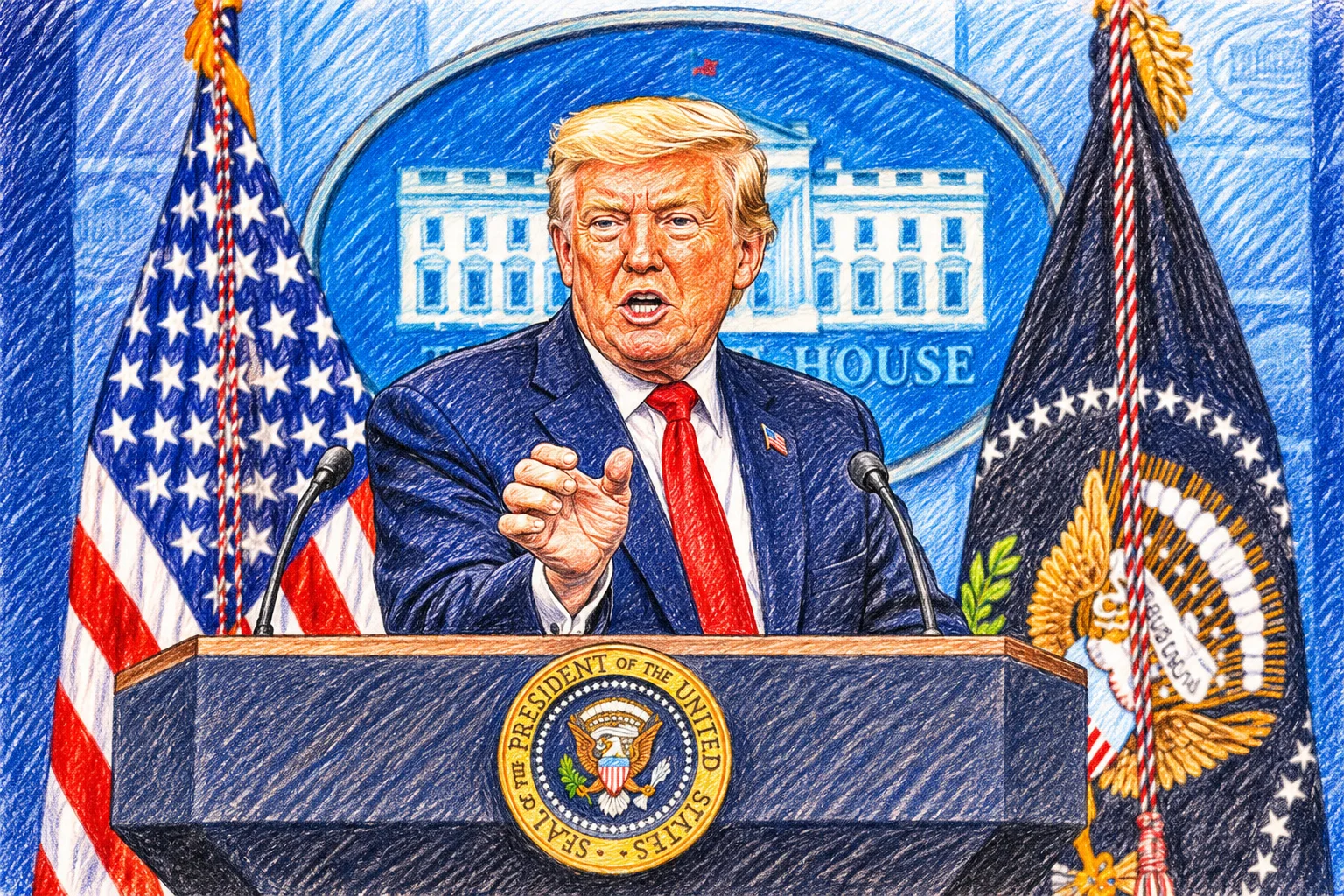
The occasion was Trump’s October speech at the White House. The president described a thousand Russian tanks allegedly moving unhindered on a concrete highway to Kyiv. According to his version, everything could have been finished in a day, but a “very stupid general” turned into a field where the vehicles got stuck in the mud. Trump did not name this commander’s name.

Rachman objects not because of weather details. The Ukrainian army stopped the Russian troops: it attacked the lead vehicles of the column and destroyed bridges. Under Ukrainian attacks, the armored vehicles were forced off the roads, and some vehicles indeed got bogged down in the ground. In Trump’s version, Ukrainian resistance disappears, and responsibility for the failure is removed from Putin and shifted to an unnamed subordinate. This is the tone the FT columnist finds telling.
On February 24, 2022, the Kremlin expected to quickly crush Ukraine. Rachman recalls 2014: the annexation of Crimea, in his assessment, did not meet significant resistance from Ukraine and the world community, and Putin might have decided that Volodymyr Zelensky’s government would collapse just as quickly, and the world would once again accept the accomplished fact. Instead, Russia got a long war, destruction in Ukraine, and huge losses of its own.
Why Netanyahu appeared in the article
On February 28, 2026, the US and Israel attacked Iran. According to Rachman, the bet was on a quick change of power in Tehran. Victory in a short campaign did not materialize. The author notes that Trump campaigned as an opponent of foreign wars, but by early 2026 he was encouraged by strikes on Iranian nuclear facilities in June 2025 and the operation against Venezuelan President Nicolas Maduro.
In the column itself, Netanyahu is given a specific role. Rachman writes that a few weeks after the Venezuelan operation, Benjamin Netanyahu persuaded Trump to strike Iran again. This is the political role of the Israeli premier as presented by the columnist, not a published record of the conversation. In his opinion, previous successes made Trump more receptive to such a proposal.
Rachman sees a common weakness: both leaders concentrated power in themselves and surrounded themselves with people who rarely argue with the boss. When a plan is based on the expectation of a quick enemy capitulation, it is especially difficult to oppose it within such a system. But here the comparison requires caution. Russia is trying to conquer a neighboring democratic country and seize its lands. Iran is ruled by a repressive regime, which, as FT emphasizes, has thousands of murdered citizens on its account. Neither Israel nor the US claims Iranian territory. The similarity of miscalculations does not make the wars themselves identical.
The cost of error — elections, losses, and others’ security
For Americans, the war with Iran also resulted in inflation. Rachman links its consequences to the heavy defeat of Republicans in the midterm congressional elections in early November. Midterm elections are a vote for Congress in the middle of a presidential term, not the election of the president himself. Trump remains in the White House, but his political opportunities change. The US can still intensify strikes on Iran, but, according to the columnist, the experience of Vietnam, Afghanistan, and Iraq shows that the American system sooner or later forces presidents to end unsuccessful wars.
For Israel, there is an unpleasant dilemma here. The threat from Tehran does not disappear just because gasoline prices rise in Washington and Congress changes. If the American president seeks a way out of a prolonged conflict, Israeli leadership will have to consider this difference in interests. Earlier, Israel News analyzed the cost of the war with Iran for Israel and Ukraine. This is a conclusion from the logic of the column, not a report from FT about a decision made by the White House.
With Putin, it’s different. Rachman cites an estimate of 1.5 million Russian military losses — referring to both killed and wounded, not just the dead. Competitive elections in Russia are destroyed, anti-war forces are not allowed to power, and the fates of Alexei Navalny and Boris Nemtsov remind of the cost of real opposition. Therefore, defeat on the battlefield does not turn into a political ban on continuing the war there.
At the end, Rachman shifts the conversation to Beijing. He reminds of the supposed readiness of the Chinese army for an operation against Taiwan by 2027. This is not a set date for an attack: it is about military capabilities and leadership choices, including a possible blockade of the island or invasion. Rachman considers Xi Jinping a more cautious strategist for now, but he also does not like objections. He may see a warning in Ukraine and Iran, or he may decide that the Taiwanese will not resist and that things will be different with him. This is the author’s concern: the fate of millions may again depend on the decision of one person, next to whom there is no one to say “no”.